








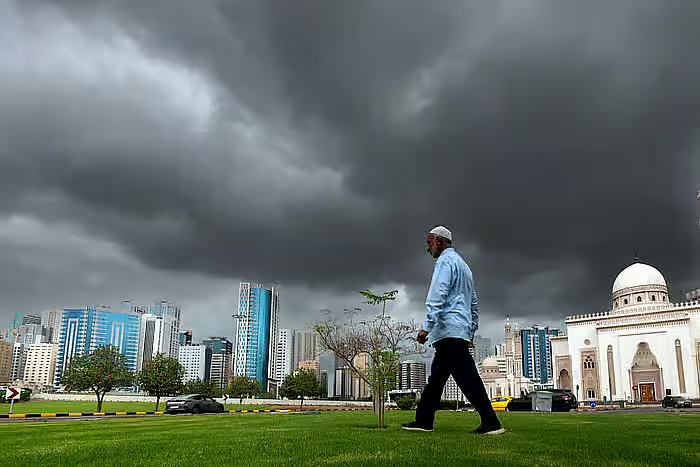
UAE: UAE residents have been called to join a special rain prayer, known as Salat Al Istisqaa, at mosques across the country on Friday, October 9, as the nation seeks rainfall and God’s mercy.
The prayer is scheduled for 12:15pm in Dubai and 11:38am in Sharjah, shortly before the weekly Friday prayer.
What Is Salat Al Istisqaa?
Salat Al Istisqaa is a special prayer performed by Muslims to ask God for rain. It is considered a confirmed Sunnah, meaning it is an established practice of Prophet Mohammed (PBUH), but it is not obligatory.
Rain is regarded in Islam as a manifestation of God’s mercy, and prayers for rainfall hold particular significance in the Arabian Gulf because of the region’s arid climate.
Is the Rain Prayer Obligatory?
No. Salat Al Istisqaa is voluntary, but joining the congregation when the prayer is announced is encouraged as an act of collective supplication.
Those attending are encouraged to approach the prayer with humility, calmness and a sincere intention to seek God’s mercy and blessings.
How Is the Prayer Performed?
The rain prayer consists of two rak’ahs, or units of prayer.
There is no adhan or iqamah for Salat Al Istisqaa. Worshippers simply gather at the designated time and begin the prayer.
The imam is recommended to recite aloud. In the first rak’ah, Surah Al-A’la or a similar chapter may be recited, while Surah Al-Ghashiyah or a similar chapter may be recited in the second.
Those who arrive early may perform voluntary prayers before the rain prayer, and voluntary prayers may also be offered afterward.
Two Sermons After the Prayer
After completing the two rak’ahs, the imam delivers two sermons.
Unlike the usual Friday sermon, the imam delivers the sermons while standing on the ground rather than ascending the pulpit, reflecting humility before God.
The imam is encouraged to begin by seeking God’s forgiveness and to frequently ask for forgiveness throughout the sermon.
The imam then sits briefly before delivering the second sermon.
Why Does the Imam Turn His Cloak?
Toward the end of the second sermon, the imam faces the qiblah and turns his cloak inside out.
This gesture symbolises hope for a change from hardship to ease.
The imam then raises his hands and makes heartfelt supplications, asking God to send beneficial rain for the people and the land.